Vaccinations are a key part of keeping your equine healthy. They protect against serious, often fatal diseases that cannot easily be treated, helping to keep your equine – and the wider equine community – safe.
In the UK, the main vaccines recommended are for Equine Influenza (Flu) and Tetanus. Staying up to date also ensures your equine meets competition and insurance requirements.
Due to recent flu outbreaks, most horses now require a booster every 6 months rather than annually.
Tetanus vaccination can be given as part of a combined flu–tetanus vaccine or separately.
Tetanus is caused by bacteria in soil and manure – even minor wounds can be fatal if a horse is not protected, so regular vaccination is essential for every horse.
To protect both mare and foal, we recommend:
Need advice?
We are happy to review your horse’s vaccination history and plan a schedule tailored to their lifestyle and competition goals. If you are unsure when your horse’s next booster is due, just get in touch – we will be glad to help.
Regular dental care is vital to your equine’s wellbeing and performance. Subtle dental problems can cause pain, weight loss, or resistance under saddle long before clear signs appear. With gentle sedation and advanced equipment, we provide thorough, stress-free dental examinations and treatments right at your yard – keeping your equine comfortable, happy, and performing at their best.
Routine dental care is an essential part of every equine’s healthcare plan. We recommend a dental examination every 12 months at the same time as the annual booster although in some cases depending on age, workload, and individual dental needs we might recommend every 6 months.
Dental problems can cause pain, weight loss, poor digestion, colic, choke, behavioural changes and poor performance.
Regular check-ups allow us to detect problems early, often before obvious signs appear. By the time an equine shows issues such as dropping food, difficulty chewing, headshaking, or resisting the bit, dental disease may already be advanced.
We are experienced in all aspects of routine equine dentistry, including power floating, wolf tooth removal, incisors and cheek teeth extractions and diastema flushing and widening.
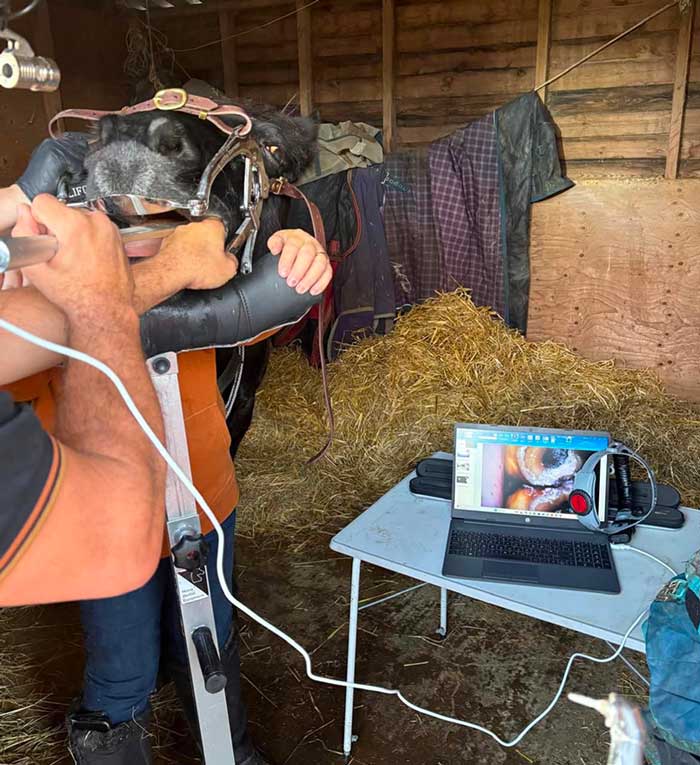
Every routine dental appointment includes a comprehensive oral examination using appropriate lighting and specialised dental equipment. Where indicated, we may recommend an oroscope (dental camera), which allows us to examine every area of the mouth in exceptional detail and identify problems that may not be visible during a standard examination.
To ensure a calm, safe, and stress-free experience for your horse, we routinely provide light sedation at no additional cost. This allows for a thorough assessment and precise treatment while maximising your horse’s comfort and safety.
Most dental procedures can be carried out at your yard, minimising disruption for both horse and owner.
Worms can quietly undermine your equine’s health, leading to weight loss, poor condition and colic. Our approach focuses on strategic, evidence-based worming using regular worm egg counts (WECs) and pasture management. This protects your horse, the wider herd, and the long-term effectiveness of vital worming treatments.
Effective worm control is essential for your equine’s health. We recommend using worm egg counts (WEC) to guide treatment. WEC testing identifies which worms are present and in what numbers, allowing targeted treatment rather than routine blanket worming. Strategic treatment also protects the environment by reducing contamination of pastures, as wormers are eliminated in faeces.
Reducing unnecessary wormer use also helps prevent resistance, which is a growing concern in equine worm populations. Good grazing management, such as daily poo picking, alongside regular WEC testing, is key to keeping your equine healthy and protecting wormer effectiveness across your yard.
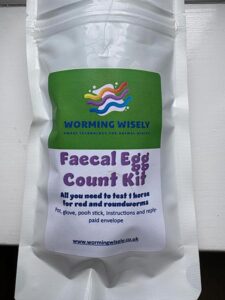
We supply worm egg count Kits on request ready to be sent in the post for just £17 each. Once we receive the results, we will contact you to discuss each case individually.
All equines in the UK must be microchipped and issued with a valid passport in accordance with UK equine identification legislation. Microchip implantation is classified as an act of veterinary surgery and must be carried out by a qualified veterinary surgeon.
We implant ISO-compliant microchips and complete full passport identification, including markings diagrams and written descriptions, to the required standard. We also check for the presence of any existing microchip prior to implantation to avoid duplication.
Our service includes:
All procedures can be carried out at your yard with minimal stress to the equine. Sedation is not usually required, but can be used if appropriate for safety and comfort.
Some equines simply do not tolerate certain procedures well – whether it is the farrier, clipping, loading, travelling, or even routine dental work. In these situations, attempting to persist without sedation can be stressful for the animal and unsafe for everyone involved.
At Victor Franco & Partners Equine Practice, we believe that sedation, when used appropriately, is a welfare-friendly and sensible choice. It helps keep both equine and handler safe, minimises stress, and allows procedures to be carried out calmly and effectively.
Often, oral sedation does not produce the desired effect, and tasks may be left incomplete. Worry not – we will come to you and administer injectable sedation, which is the most effective and reliable method of restraint for completing procedures safely and efficiently.
We can attend your yard to safely sedate your equine for a wide range of situations, including (but not limited to):
Every sedation is tailored to the individual equine, taking into account age, temperament, any medical condition, and the nature of the task. We use only licensed veterinary sedatives and closely monitor your animal throughout to ensure their comfort and recovery.
If your equine becomes anxious, difficult, or even dangerous for certain activities, sedation may be the kindest and safest option. Please get in touch to discuss how we can help.